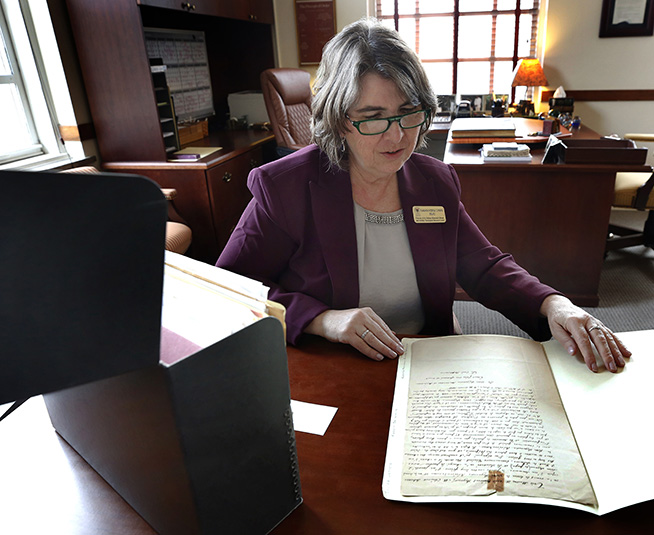
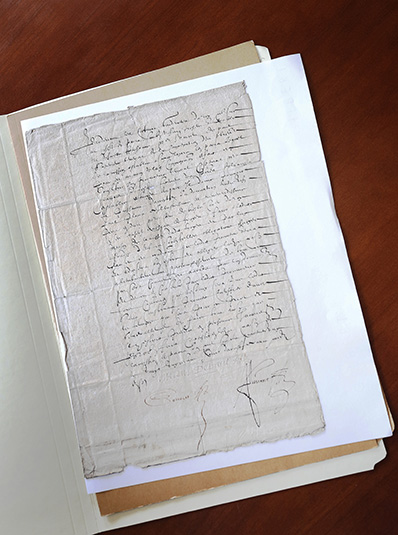
Handwritten letters by holy people of God such as St. Vincent de Paul and St. Teresa of Avila.
An early copy of St. Thomas Aquinas’ “Summa Theologica.”
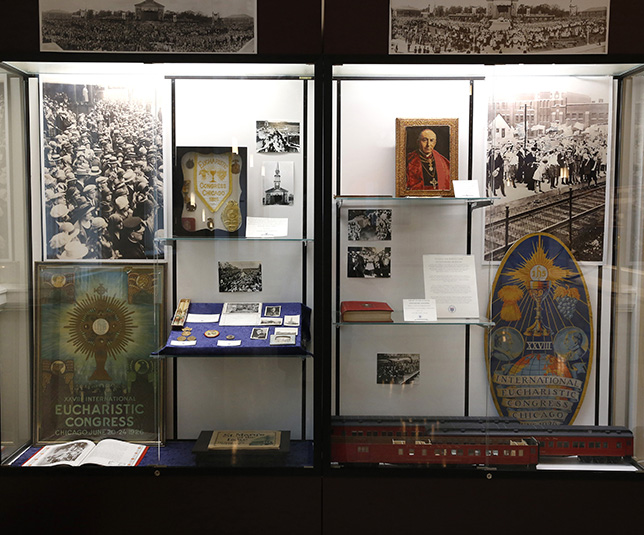
Artifacts from the 1926 International Eucharistic Congress held in Chicago and Mundelein where tens of thousands of people were in attendance.
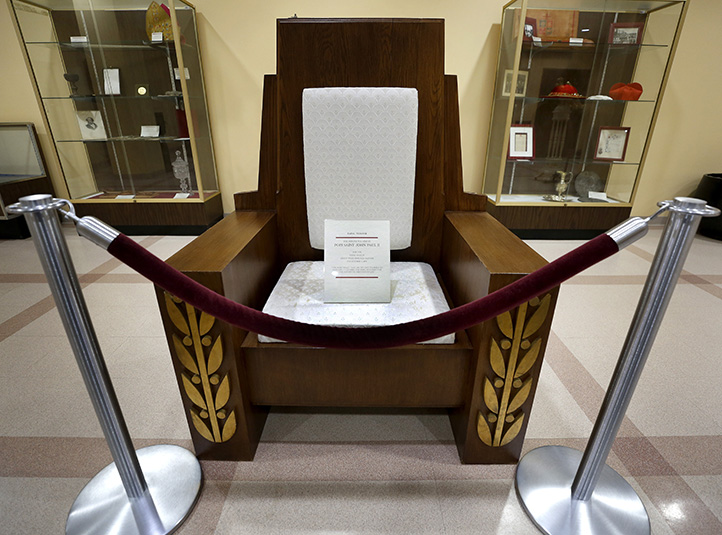
The chair St. John Paul II sat in during the historic Mass in Grant Park on Oct. 5, 1979.
These are just a few of the historical gems housed in the archives and museum at the Feehan Memorial Library on the campus of the University of St. Mary of the Lake/Mundelein Seminary in Mundelein.
Much of the collection of saints’ letters and early copies of church documents come from the personal collection of Cardinal George Mundelein, who founded the seminary and hosted the Eucharistic Congress.
He was a leading figure not just in the church at the time but in the United States. He also had an appreciation for history.
Other items were collected and stored along the way waiting for someone to unpack them. In recent years, the archives have been organized and many of the letters and documents made available for online searches at usml.edu/library.
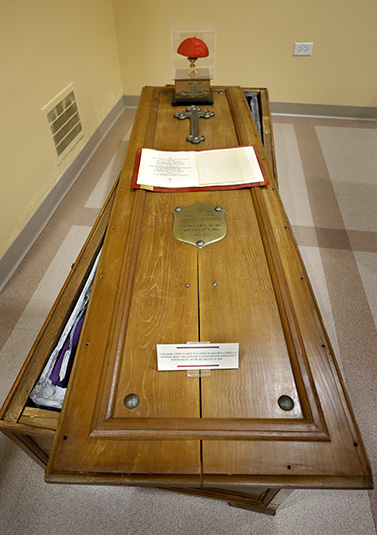
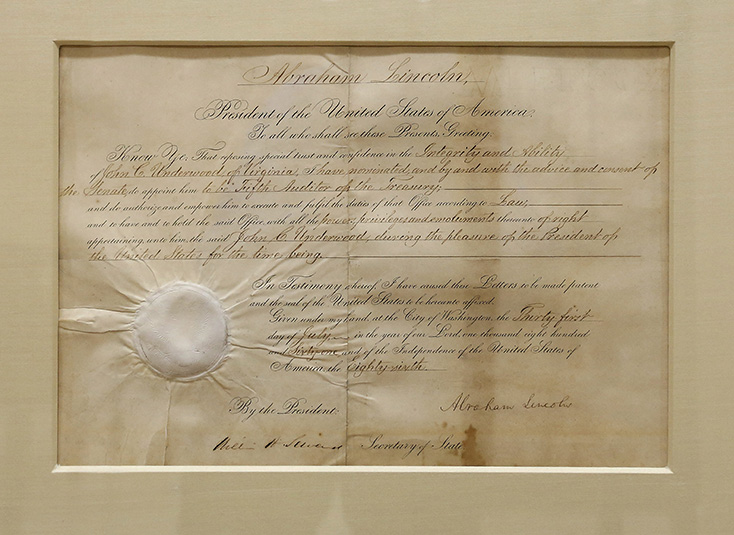
There is also a small museum in the library’s basement that is open for tours. People can see treasures such as the office of Cardinal Mundelein, a document signed by President Abraham Lincoln and an alb and rosary worn by St. Pius X.
“History is meant to be preserved, not just because it’s interesting to look at how people lived 100 years ago, but because time is not as linear as you might think,” said Samantha Lynn Seay, director of the Feehan Memorial Library and McEssy Theological Resource Center. “It really is a flowing stream, and it’s a conversation between the people of the present and the people of the past. It is our way of looking at their lives and learning from them and learning about our own behavior and why we behave the way we do and why our society is the way it is. And once we can understand that, we are a lot more tolerant of the people around us.”
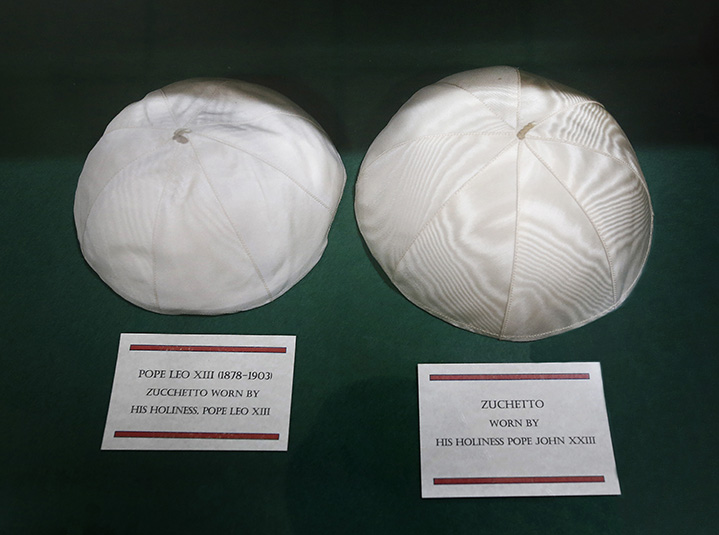
Here are a few of the artifacts housed in the archives and museum. To learn more about the archives or to plan a visit to the museum, visit usml.edu/library/museum.